The business world is changing faster than ever. Artificial Intelligence, automation, data-driven decision-making, cloud computing, and digital transformation are reshaping how organizations operate. As businesses adapt to these changes, the expectations from management professionals have also evolved.
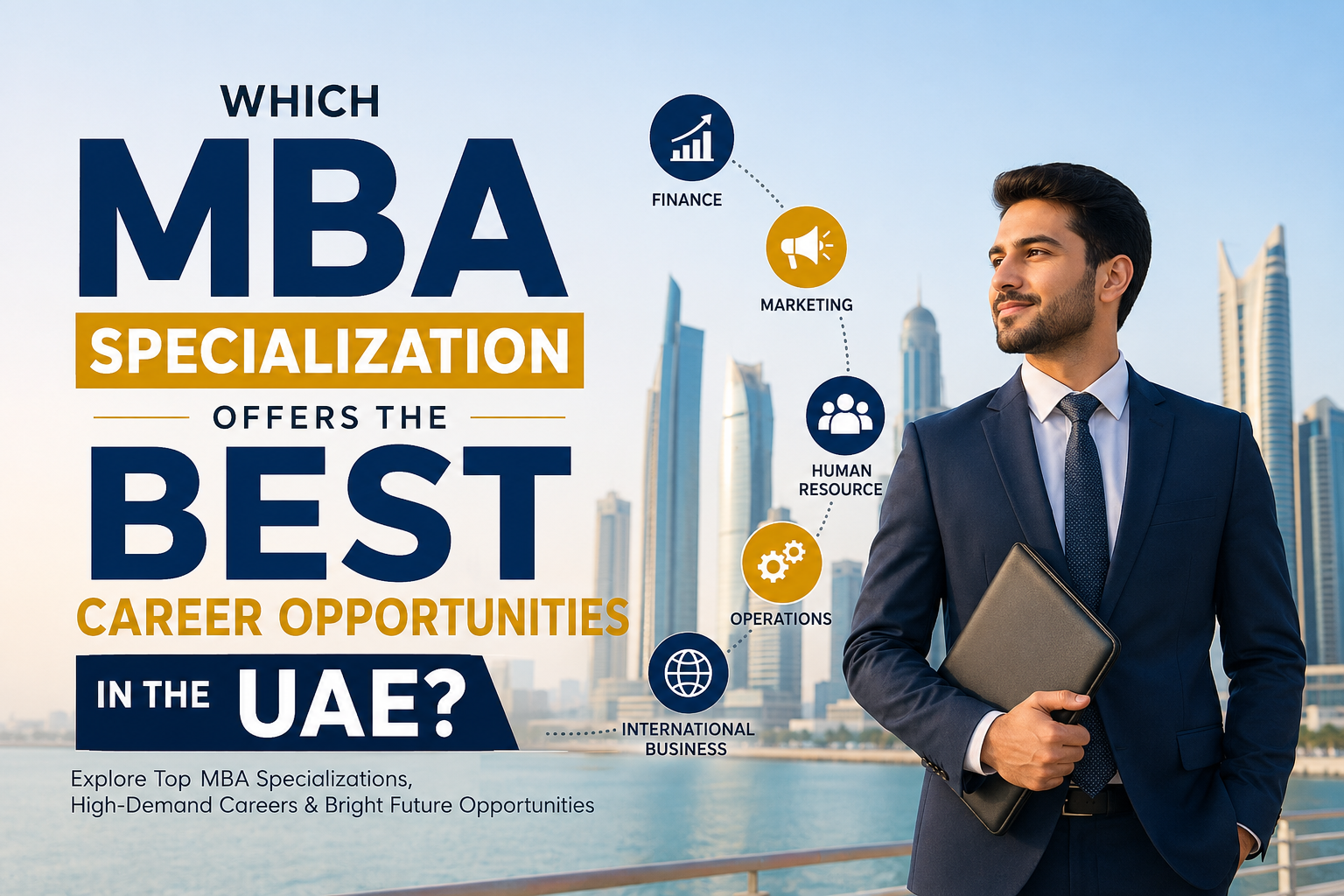
For many years, traditional MBA specializations such as Finance, Marketing, and Human Resource Management (HRM) have remained the preferred choice for aspiring business leaders. These programs continue to produce successful professionals who manage organizations, drive business growth, and lead teams.
However, employers today are increasingly looking for professionals who not only understand business but can also interpret data, leverage artificial intelligence, and make strategic decisions using advanced analytics. This has led to the rapid growth of MBA programs that combine Business Analytics and Artificial Intelligence with core management education.
Whether you are a recent graduate or a working professional planning to upgrade your qualifications, understanding the differences between these MBA options will help you choose a program that aligns with your career aspirations.
Why an MBA Remains One of the Most Valuable Degrees
An MBA develops leadership, communication, strategic thinking, and decision-making skills that are highly valued across industries.
Students pursuing mba programs in uae gain exposure to real-world business challenges, case studies, leadership development, and industry-oriented learning that prepares them for competitive global careers.
An MBA can help professionals:
- Build leadership skills
- Improve managerial abilities
- Increase earning potential
- Expand professional networks
- Gain international business exposure
- Prepare for executive positions
- Develop entrepreneurial capabilities
The value of an MBA extends far beyond classroom learning by preparing graduates for long-term career growth.
Understanding Conventional MBA Specializations
Traditional MBA programs focus on developing expertise in core business disciplines.
These specializations remain highly relevant because every organization requires professionals with strong management capabilities.
MBA in Finance
Finance remains one of the most respected MBA specializations.
Students develop expertise in:
- Corporate Finance
- Investment Analysis
- Financial Markets
- Risk Management
- Budget Planning
- Financial Reporting
- Banking Operations
Career Opportunities
Graduates often become:
- Financial Analyst
- Investment Consultant
- Banking Manager
- Corporate Finance Executive
- Credit Analyst
- Portfolio Manager
- Finance Manager
Who Should Choose Finance?
This specialization is ideal for students who enjoy working with numbers, investments, financial planning, and business strategy.
MBA in Marketing
Marketing has transformed dramatically with the growth of digital platforms and consumer analytics.
Students study:
- Consumer Behaviour
- Brand Management
- Advertising
- Sales Strategy
- Digital Marketing
- Market Research
- International Marketing
Career Opportunities
Graduates commonly work as:
- Marketing Manager
- Brand Manager
- Product Manager
- Digital Marketing Manager
- Business Development Manager
- Sales Manager
Who Should Choose Marketing?
Students with creativity, communication skills, and an interest in customer behaviour often excel in marketing careers.
MBA in Human Resource Management (HRM)
Human resources has evolved into a strategic business function.
Modern HR professionals contribute to organizational growth through talent development and workforce planning.
Students learn:
- Recruitment
- Employee Engagement
- Performance Management
- Labour Laws
- Organizational Behaviour
- Leadership Development
- Compensation Management
Career Opportunities
Graduates may become:
- HR Manager
- Talent Acquisition Specialist
- Learning and Development Manager
- Employee Relations Manager
- HR Business Partner
Who Should Choose HRM?
Individuals who enjoy working with people, developing talent, and building organizational culture often succeed in HR careers.
What Is an MBA with Business Analytics?
Business Analytics combines business strategy with data-driven decision-making.
Rather than relying solely on intuition, organizations now use data to improve efficiency, predict customer behaviour, reduce costs, and increase profitability.
Students study subjects such as:
- Business Intelligence
- Predictive Analytics
- Data Visualization
- Statistical Analysis
- SQL
- Python for Business
- Data Management
- Dashboard Reporting
Graduates learn how to convert business data into actionable insights that improve organizational performance.
What Is an MBA with Artificial Intelligence?
Artificial Intelligence is transforming industries worldwide.
MBA programs integrating AI teach students how technology influences business operations and strategic planning.
Students explore:
- Artificial Intelligence Fundamentals
- Machine Learning Concepts
- Business Automation
- AI for Marketing
- AI in Finance
- AI for Human Resources
- Intelligent Decision Support Systems
- Digital Transformation
Rather than becoming software developers, MBA graduates learn how AI can improve business performance and organizational decision-making.
Conventional MBA vs MBA with Business Analytics & AI
| Conventional MBA | MBA with Business Analytics & AI |
|---|---|
| Focuses on business management | Combines management with technology |
| Leadership-oriented | Data-driven leadership |
| Traditional decision-making | Evidence-based decision-making |
| Functional specialization | Cross-functional analytical expertise |
| Suitable for managerial careers | Suitable for digital leadership roles |
Why Businesses Are Hiring Analytics-Driven Managers
Modern organizations generate enormous amounts of business data every day.
Companies need professionals capable of:
- Understanding customer behaviour
- Predicting market trends
- Improving operational efficiency
- Reducing business risks
- Supporting strategic planning
Managers who understand analytics can make faster and more accurate business decisions.
Industries Hiring MBA Analytics Graduates
Business Analytics professionals are in demand across:
- Banking
- Financial Services
- Retail
- Healthcare
- Manufacturing
- Logistics
- Telecommunications
- E-commerce
- Consulting
- Government Organizations
The ability to interpret business data has become valuable across nearly every industry.
Why AI Skills Give MBA Graduates a Competitive Advantage
Artificial Intelligence is no longer limited to technology companies.
Businesses now use AI for:
- Customer Service
- Financial Forecasting
- Marketing Personalization
- Recruitment
- Fraud Detection
- Supply Chain Optimization
- Sales Forecasting
- Business Intelligence
Managers who understand AI can lead digital transformation initiatives and improve organizational performance.
Salary Comparison: Which MBA Specialization Pays More?
Salary depends on several factors, including experience, industry, employer, certifications, and leadership skills. However, understanding general career growth trends can help students make informed decisions.
| MBA Specialization | Entry-Level Growth | Mid-Level Growth | Long-Term Growth |
|---|---|---|---|
| Finance | High | Very High | Excellent |
| Marketing | High | Excellent | Excellent |
| HRM | Moderate | High | Very Good |
| Business Analytics | Very High | Excellent | Outstanding |
| AI & Business | Very High | Outstanding | Exceptional |
Traditional MBA specializations continue to offer excellent career progression, while Business Analytics and AI are rapidly emerging as some of the fastest-growing management fields.
Career Opportunities After MBA Finance
Finance professionals continue to be among the most sought-after business experts.
Popular career options include:
- Financial Manager
- Investment Analyst
- Banking Manager
- Corporate Finance Executive
- Credit Risk Analyst
- Treasury Manager
- Financial Consultant
- Portfolio Manager
- Wealth Advisor
- CFO (with experience)
Finance professionals are needed in banking, insurance, investment firms, multinational corporations, consulting firms, and government organizations.
Career Opportunities After MBA Marketing
Marketing has evolved far beyond traditional advertising.
Today’s marketers manage digital transformation, customer experiences, and business growth.
Career opportunities include:
- Marketing Manager
- Brand Manager
- Product Manager
- Growth Marketing Manager
- Business Development Manager
- Digital Marketing Director
- Market Research Analyst
- CRM Manager
- Sales Manager
- Marketing Consultant
As digital commerce expands, marketing professionals continue to enjoy strong career prospects.
Career Opportunities After MBA HRM
Modern HR professionals play strategic roles within organizations.
Popular positions include:
- HR Manager
- Talent Acquisition Manager
- HR Business Partner
- Learning & Development Manager
- Organizational Development Consultant
- Compensation & Benefits Manager
- Employee Relations Manager
- Recruitment Consultant
- Workforce Planning Specialist
Organizations increasingly recognize HR as a critical contributor to business success.
Career Opportunities After MBA Business Analytics
Business Analytics graduates bridge the gap between technology and management.
Common job roles include:
- Business Analyst
- Data Analytics Consultant
- Business Intelligence Manager
- Product Analyst
- Strategy Consultant
- Customer Insights Manager
- Analytics Manager
- Operations Analyst
- Financial Analytics Specialist
- Digital Transformation Consultant
These professionals help organizations make smarter decisions using business data.
Career Opportunities After MBA with Artificial Intelligence
AI-focused MBA graduates are prepared to lead digital innovation initiatives.
Potential career paths include:
- AI Strategy Manager
- Innovation Consultant
- Digital Transformation Manager
- AI Product Manager
- Automation Consultant
- Business Intelligence Director
- Technology Strategy Consultant
- Enterprise Innovation Manager
As AI adoption accelerates, professionals who understand both business and technology will continue to be in high demand.
Industries Recruiting MBA Graduates
MBA graduates find opportunities across diverse industries.
Finance
- Banks
- Investment firms
- Insurance companies
- FinTech organizations
Technology
- Software companies
- Cloud service providers
- Artificial Intelligence firms
- Cybersecurity companies
Healthcare
- Hospital management
- Healthcare consulting
- Pharmaceutical organizations
Retail & E-Commerce
- Brand management
- Supply chain
- Customer analytics
- Sales strategy
Manufacturing
- Operations
- Procurement
- Logistics
- Production planning
Consulting
Consulting firms recruit MBA graduates to solve business challenges across industries.
Skills Employers Expect in 2026
Recruiters increasingly seek professionals with a balanced mix of technical and managerial capabilities.
Key skills include:
Strategic Thinking
Making informed long-term business decisions.
Leadership
Managing teams and organizational change.
Data Interpretation
Understanding reports and business metrics.
Communication
Presenting ideas effectively to stakeholders.
Digital Awareness
Understanding emerging technologies.
Problem Solving
Identifying and resolving complex business challenges.
Adaptability
Responding to rapidly changing market conditions.
MBA graduates who combine business knowledge with analytical thinking enjoy a competitive advantage.
Conventional MBA vs Business Analytics & AI: Which Is Better?
There is no universally better option.
The right choice depends on career goals.
Choose MBA Finance If
- You enjoy numbers.
- You want a banking career.
- You are interested in investments.
- You aspire to become a finance leader.
Choose MBA Marketing If
- You enjoy creativity.
- You like branding.
- You enjoy customer engagement.
- You want to work in digital marketing.
Choose MBA HRM If
- You enjoy working with people.
- You are interested in leadership development.
- You want to build organizational culture.
Choose MBA Business Analytics If
- You enjoy solving business problems.
- You like working with data.
- You want strong future demand.
- You prefer technology-driven decision-making.
Choose MBA with AI If
- You want future-ready skills.
- You are interested in innovation.
- You want to lead digital transformation.
- You enjoy combining business with technology.
Why Business Analytics & AI Are the Future of Management
Organizations no longer rely only on experience and intuition.
Business leaders now make decisions using:
- Predictive Analytics
- Customer Intelligence
- AI-powered Forecasting
- Market Data
- Business Dashboards
- Automation
- Machine Learning Insights
Managers who understand these technologies become valuable assets for organizations.
Future Demand (2026–2035)
Industry experts expect rapid growth in:
- Artificial Intelligence
- Data Analytics
- Financial Technology
- Business Intelligence
- Digital Marketing
- Cloud Computing
- Automation
- Cybersecurity
MBA graduates with analytical and AI skills are well-positioned to lead these transformations.
Final Thoughts
Choosing the right MBA specialization is one of the most important career decisions you will make. While traditional MBA programs in Finance, Marketing, and HRM continue to provide excellent opportunities, the growing influence of Business Analytics and Artificial Intelligence is redefining what employers expect from future business leaders.
If your goal is to build a career in banking, finance, branding, sales, or human resource management, a conventional MBA remains a strong choice. However, if you want to lead digital transformation, leverage data-driven decision-making, and stay ahead in an increasingly technology-focused business environment, an MBA with Business Analytics and AI offers a significant competitive advantage.
The ideal choice is one that aligns with your interests, strengths, and long-term professional ambitions.
Ready to Advance Your Career?
Your postgraduate education is more than a qualification—it is an investment in your future. Choosing an MBA that combines academic excellence with industry relevance can open doors to leadership roles, international career opportunities, and long-term professional success.
Apply today to explore MBA specializations, connect with our admissions team, and take the next step toward becoming a future-ready business leader.